
Sabong animal welfare concerns the condition and treatment of birds used in cockfighting. “Gamefowl” describes the birds associated with that activity; it does not mean a video game. Understanding the terminology helps distinguish a photograph of a rooster from evidence of a contest, an injury or an online service.
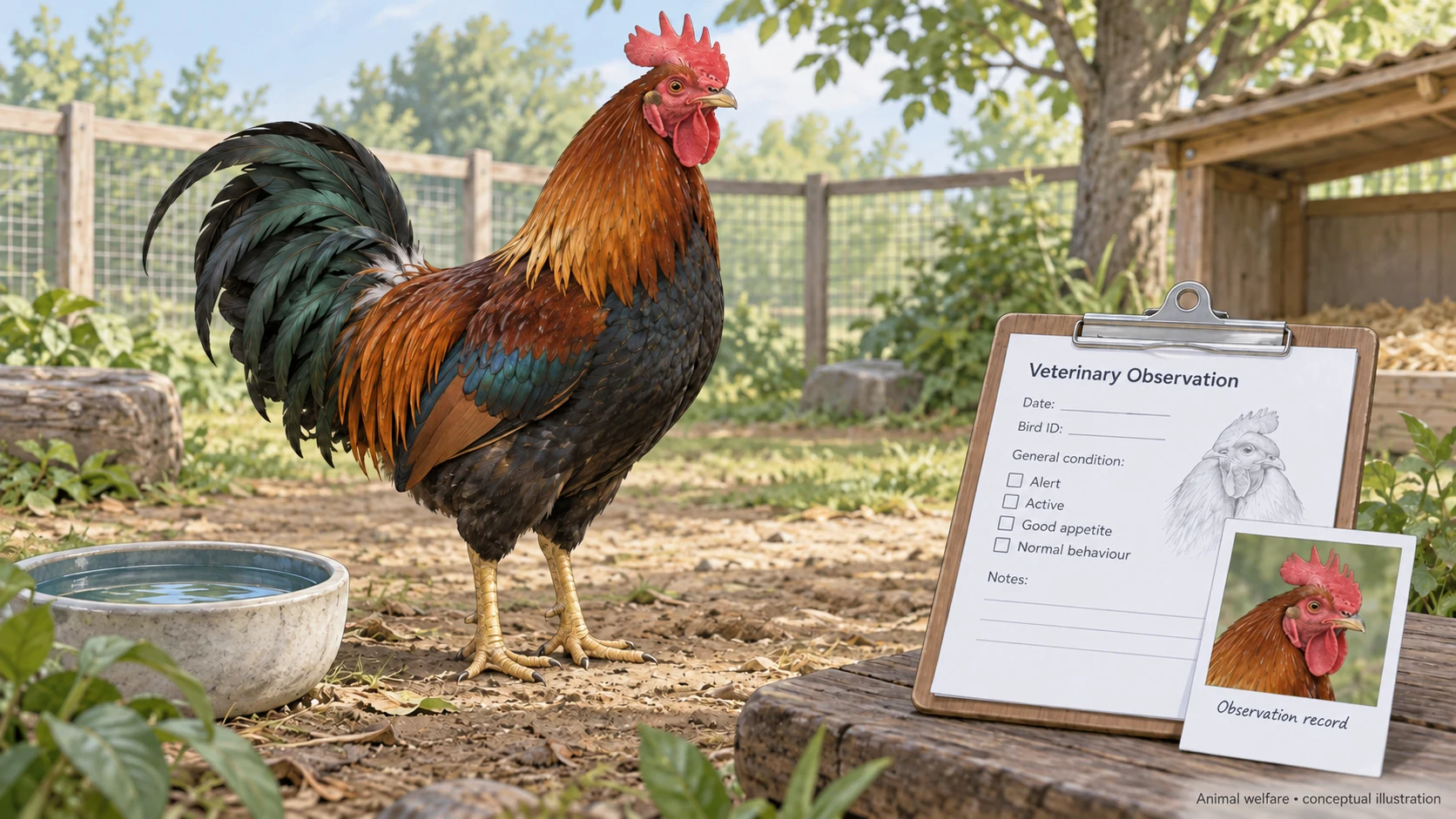
What do sabong, gamefowl and gamecock mean?
A rooster is a male chicken. In a cockfighting context, “gamecock” or “gamefowl” refers to birds bred or kept for that purpose. Sabong refers to cockfighting, while e-sabong concerns electronic access to cockfighting-related activity.
These distinctions matter when reading captions. A picture labelled “game chicken” may show only a bird. The label alone does not prove that a fight occurred, where it happened or who organised it. Conversely, replacing a graphic caption with a harmless-sounding word does not change what the footage depicts.
The Sabong terminology and context guide explains the separate roles of a physical event, a video feed and a financial record. This article focuses on the animal and on responsible interpretation of images.
Sabong animal welfare: why a winning label is not a health assessment
Cockfighting can cause serious injury and death. The RSPCA identifies pain and suffering to birds as central concerns in its work on animal fighting. A contest result is therefore not a welfare assessment: a bird described as a winner may still be injured, and an animal that survives a contest may still require professional care.
A welfare question asks about the animal’s condition and needs. A competitive label answers something else. Treating the label “champion” as evidence of health skips that distinction.
For example, a short clip may show a bird standing but exclude what happened before or after the recording. That is insufficient to diagnose it as healthy. Equally, an unusual posture in a single image should not be turned into a specific medical diagnosis by an unqualified observer.
Describe observable facts, such as visible bleeding or an inability to stand, without guessing the cause, severity or treatment. Seek veterinary help for an injured animal rather than trying to prepare it for another contest. This page provides no fighting, conditioning or equipment instructions.
What online gamefowl images can and cannot establish
| Material | Useful observation | Limit |
|---|---|---|
| Single photograph | What is visibly present in that frame. | It rarely establishes the full sequence or circumstances. |
| Edited video | The actions included in the edit. | Missing intervals may conceal relevant context. |
| Caption or account name | What the uploader claims. | The identity, place and date may be unverified. |
| Original link and capture time | Where and when the material was encountered. | The upload time is not necessarily the event time. |
An old recording can be reposted as recent. An account can also share someone else’s footage. Separate “this account uploaded the clip” from “this person carried out the act”. That distinction protects the reliability of a report and avoids an unsupported public accusation.
Checking whether a gamefowl image is original, reused or illustrative
Look for the earliest source you can identify, rather than assuming the account with the most shares created the image. A reverse-image search may reveal earlier copies or a different caption. An earlier match can challenge a claim that a photograph was taken today; no match does not prove that the image is new or authentic.
Check whether the publisher identifies the material as an illustration, stock image or AI-generated image. An illustration can explain a topic, but it is not documentary evidence of a particular bird’s treatment. The illustration on this page is labelled for that reason. Visual oddities alone are not a dependable test of AI generation, and a realistic appearance does not authenticate an image.
If the caption uses equipment-specific terms, the explanation of knife-blade sabong and welfare risks helps separate the label’s meaning from claims about a particular event. Do not infer the bird’s history or condition from a label alone.
How to document a suspected animal-welfare concern
If material appears to show mistreatment, retain the original page address, the uploader name as displayed and the date and time you encountered it. Note what you directly saw and what you learned only from a caption. Keep any existing original files separate from annotated or cropped copies.
Use the platform’s reporting route where appropriate. Publicly reposting a disturbing clip is not the same as submitting an actionable report; it may remove context, expose people unnecessarily and circulate the material further. Do not enter private property, confront suspected organisers or put yourself at risk to obtain additional footage.
PAWS advises reporting animal cruelty promptly to barangay officials or the police and explains that its legal assistance may require a witness affidavit. Check the organisation’s current official reporting guidance. An online observer should describe the limits of their knowledge rather than claim to have witnessed events in person.
A practical record for an online observation
Keep a short factual note with the material you submit privately. This is an organisational aid, not a replacement for a witness affidavit or the receiving organisation’s requirements:
- Source: the original post URL and the account name displayed when you viewed it.
- Timing: when you accessed the post, including the time zone; record any claimed event date separately.
- Observation: what the image or sequence visibly shows, without diagnosing injuries.
- Uncertainty: whether the event location, recording date and uploader’s involvement are unverified.
- Files: identify which copies are original and which contain crops or annotations.
For example: “I saw this repost at the recorded URL. It shows a rooster with visible bleeding. The caption names a location, but I have not verified that location and did not witness the event.” This distinguishes an online observation from a firsthand account while retaining information that a reviewer can follow up.
Sabong and e-sabong in the Philippines: different legal questions
Executive Order No. 9, dated 28 December 2022, directed the continued nationwide suspension of e-sabong operations. Its text distinguishes those operations from traditional cockfights authorised under existing laws. A claim about a physical venue should therefore not be treated as proof of permission for a website or remote activity.
This distinction also prevents a broad assumption that every photograph of gamefowl establishes an illegal act. The applicable facts and rules need assessment. This page does not verify a particular venue, service or licence, and does not offer a legal conclusion about an individual case.
For a welfare concern, focus on the animal’s observable condition, a safe reporting route and accurate context. Avoid sharing instructions that could help arrange fights or inflict harm. Describing a cultural practice does not require endorsing injury to animals.
