
Crazy Time is an Evolution live game show combining a main wheel with digital multiplier and bonus features. Understanding it requires separating the wheel result, any applicable multiplier and the rules of a triggered bonus. This guide covers Evolution’s documented game; an “A” label does not independently confirm a distinct set of ABC8 table rules.
Read the game as several connected events
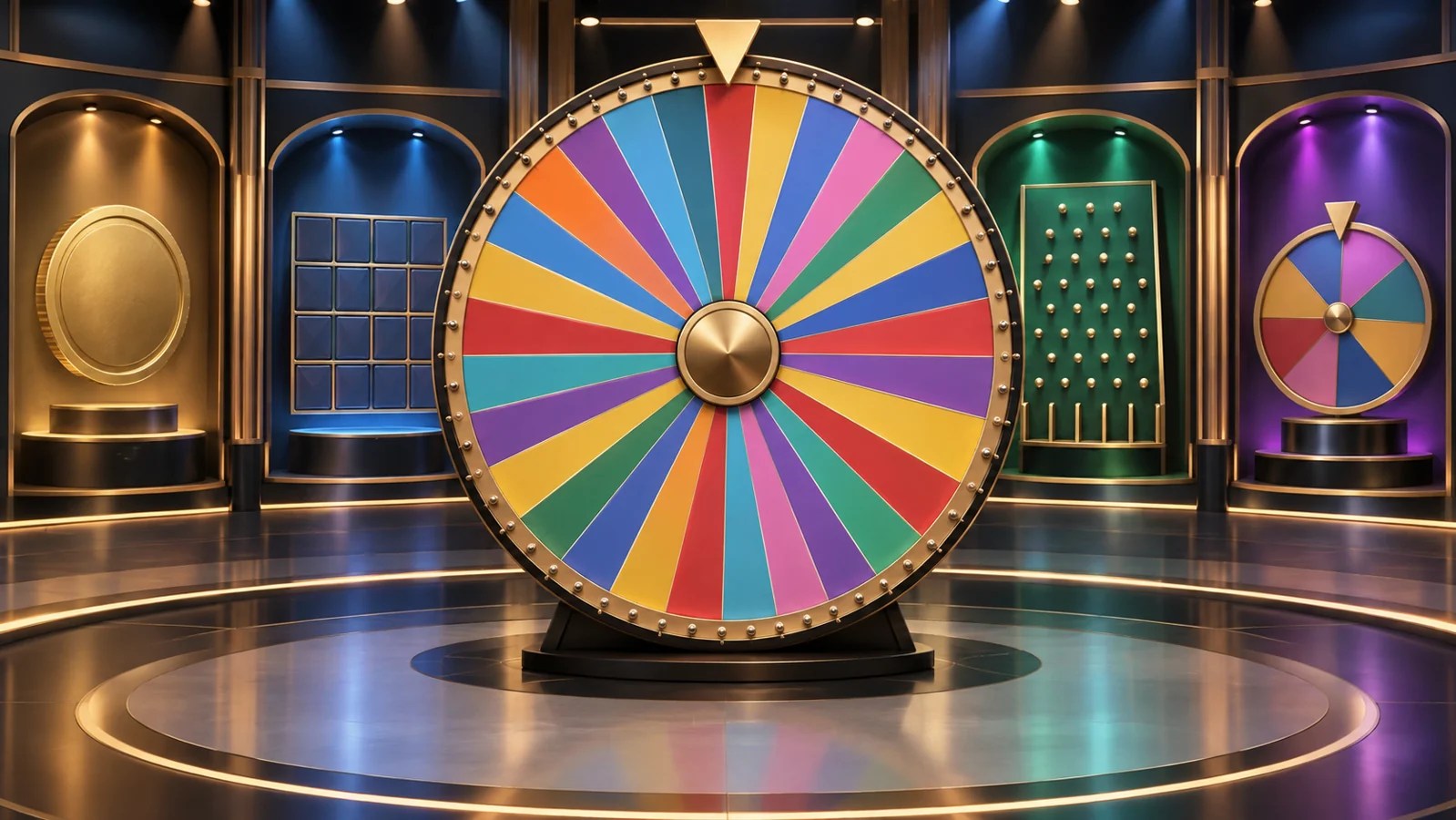
The main wheel contains number outcomes and bonus outcomes. The Top Slot is a separate feature that assigns a multiplier to an outcome. A displayed multiplier is not automatically an award: its application depends on the corresponding result and the game’s rules.
Evolution names four bonus features: Coin Flip, Cash Hunt, Pachinko and Crazy Time. A bonus is part of the game mechanics, distinct from an operator’s promotional offer. Watching a bonus event is also different from qualifying for a settlement from it.
What the bonus labels describe
Coin Flip uses a two-sided result with associated multipliers. Cash Hunt uses concealed multipliers in a target display. Pachinko uses a board-and-puck presentation. The Crazy Time bonus uses a further wheel with multipliers. These are different event structures, not four guarantees of a particular return.
The exact sequence and applicable conditions matter more than a highlight clip. A video of a large multiplier can omit the original qualifying event, the relevant cost and the rule connecting the result to an award.
A conditional probability example
Imagine an unrelated fictional game where a special event occurs with probability one in ten, and a particular award occurs in one in five of those events. Under those stated assumptions, the combined probability is 1/10 × 1/5 = 1/50, or 2%.
That is not a Crazy Time probability. It illustrates why a bonus-entry chance and the chance of a particular award inside the bonus cannot be substituted for each other. If the conditional probabilities are unknown, a large multiplier shown in a clip does not supply them.
Likewise, a theoretical return percentage would need a defined event and model. It would not tell one viewer what the next wheel result will be.
Trace the event through its separate stages
| Stage | Record to identify | Unsupported shortcut |
|---|---|---|
| Main wheel | The outcome recorded for the specific round. | Any dramatic animation on screen is the main result. |
| Applicable multiplier feature | Which outcome the multiplier belongs to and its condition. | The displayed factor applies to everything in the round. |
| Triggered bonus | The named bonus and the rules governing that event. | Entering the bonus guarantees a particular award. |
| Settlement | The amount credited under the accepted event’s rules. | The largest visible number equals the account’s net gain. |
This framework keeps several observations from becoming one unsupported calculation. It is not a substitute for Evolution’s rules or an assertion about a particular ABC8 table configuration.
A correct probability can still answer the wrong question
In the earlier fictional example, the special event occurs in one tenth of trials, and the named award appears in one fifth of special events. “One in five” is a conditional probability: it describes the situation after the prerequisite event. “One in fifty” describes the complete sequence from the start.
If a clip collection contains only bonus events, counting the award in those clips cannot estimate the rate across all rounds. The ordinary rounds were excluded before counting began. A large number of selected clips does not remove that selection problem.
A usable data description therefore needs the event definition, the period observed and which rounds were included or omitted. It should also identify whether the material concerns the same game version. Without those details, a percentage may sound precise while its denominator is unclear.
Multiplier arithmetic needs a base and an applicable rule
Suppose a fictional record shows a two-unit base and a factor of 10. A rule applying that factor to the base would yield 20 gross units. If another factor of five appears elsewhere on screen, multiplying to reach 100 requires an additional rule connecting it to the same award. The second display alone does not establish that connection.
These are not Crazy Time award figures. They demonstrate the difference between reading a value and establishing how it is used. If the base already includes a previous calculation, applying that earlier factor again would count it twice.
A bonus feature is not automatically a jackpot pool
A triggered feature can produce an award without being a progressive jackpot. The explanation of jackpot pools and prize tiers describes what those terms mean. It does not turn Crazy Time’s bonus labels into the same prize arrangements or transfer slot rules to the wheel game.
For broader questions about identifying a table and its rule information, the live format and round-record guide provides context. For a particular Crazy Time record, keep the main result, the applicable feature and the settlement together instead of combining unrelated highlights.
Recent history describes the past
Evolution’s own explanation states that earlier Crazy Time spins do not predict future ones. A long absence of a named bonus is not evidence that it must appear next. A streak can be noticed after it occurs without being a method that could have forecast it.
A result tracker can be useful for locating an already completed round. That is different from paying for a “predictor” or allowing software access to an account on the claim that it knows future outcomes. No such capability is established here.
Reconcile a record before drawing a conclusion
For an unclear completed round, identify the main result, the applicable Top Slot event if any, the triggered bonus and the recorded settlement. Keep the round reference and timing with those observations. Do not combine multipliers from unrelated phases or assume that the largest number visible belonged to your record.
This explanation does not confirm ABC8 availability, current limits or any payout entitlement. It provides no recommended choice or betting system. If the pace, suspense or desire to recover losses makes stopping difficult, disengage and seek support rather than treating another round as a solution.
