
Withdrawal disputes are easier to describe when you separate the amount requested, the amount a service says it released and the amount actually received. If an ABC8-related funds-return request remains unresolved, gather those records and request a specific written explanation. This page does not verify ABC8 processing times, fees or any individual’s entitlement to payment.
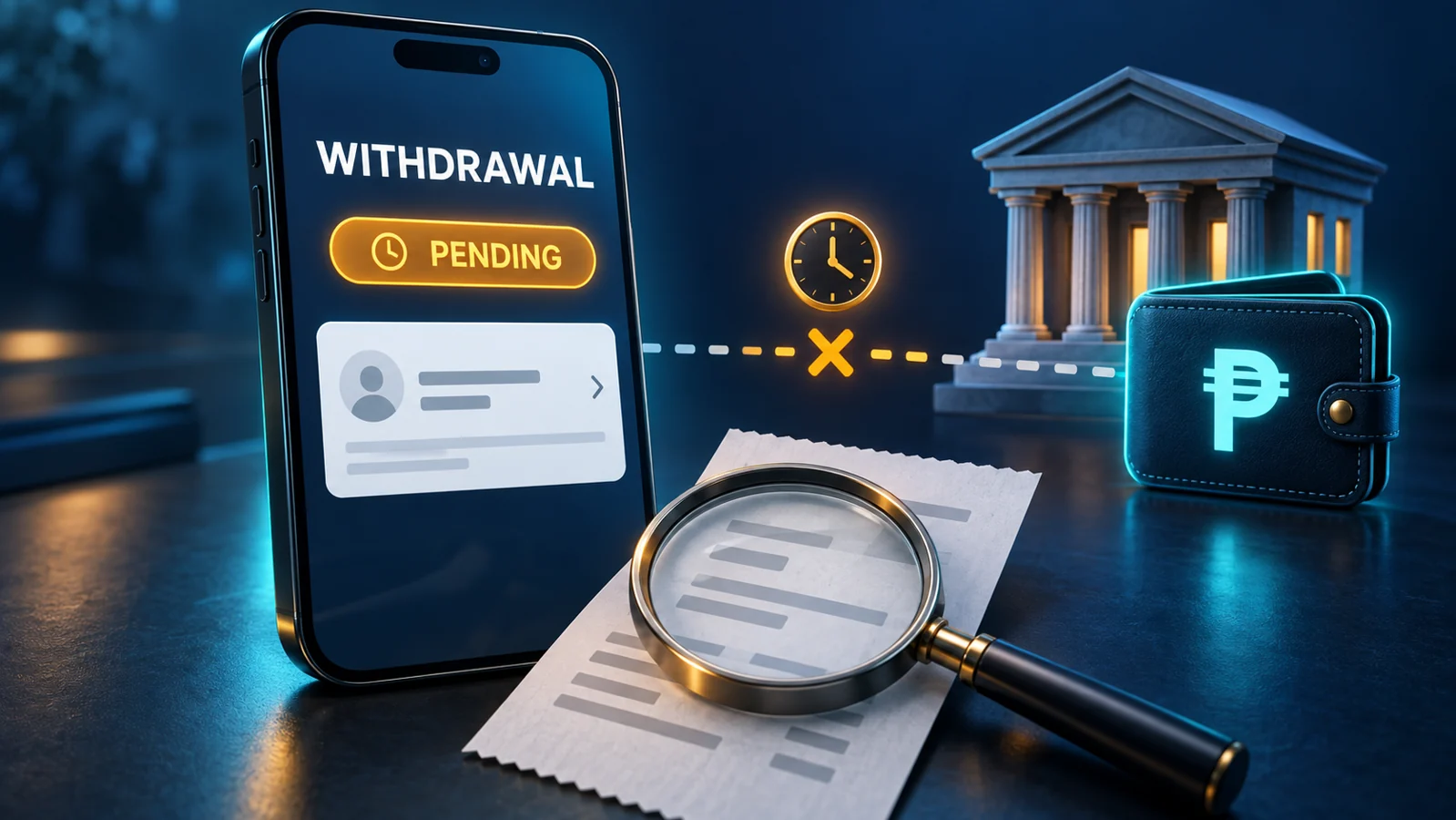
“Requested”, “released” and “received” are different records
A request entry shows that a request exists. A release message claims that the service sent money. A receiving-bank or wallet entry shows a credit to that account. One record should not be substituted for another.
When a service reports completion but no credit appears, ask for the payment reference, release date, currency and the destination’s masked account details. The receiving institution can explain what it can trace with that information. Avoid assuming that every service uses the same status labels or that a screenshot of “completed” proves settlement.
Reconcile the amount with an itemised example
Suppose a fictional request is for ₱2,400. The service says it released ₱2,350, while the receiving account records ₱2,350. There are two separate questions: whether ₱2,350 arrived, and why ₱50 was deducted. Calling the whole ₱2,400 “missing” obscures the evidence.
Record the requested amount, stated deduction, released amount and received amount separately. Preserve the terms or fee notice that applied to the request, if available. If there is no explanation for a deduction, ask for the exact clause and calculation. This example is arithmetic, not an ABC8 fee schedule.
Find where the two sides of the record stop agreeing
| Observation | Question to resolve | Useful evidence |
|---|---|---|
| Request exists, but no release is reported | What prevents a decision or release? | Request reference, stated restriction and the response explaining it. |
| Release is reported, but no receipt is visible | What traceable payment was sent, and to which masked destination? | Release reference, currency, date and receiving institution’s response. |
| Some money arrived, but the amount differs | Is the difference an itemised deduction, a separate payment or unexplained? | Each received entry and the calculation offered for the difference. |
| The request was cancelled or returned | Where is the returned amount recorded? | Cancellation explanation and the corresponding balance entry. |
For withdrawal disputes, use the table to identify whether the uncertainty concerns release, receipt or deductions. It does not imply that every service uses the same stages. A status label has meaning only within the process that produced it. Ask for an explanation of that label instead of substituting a processing deadline from another website.
One request can contain two unresolved issues
In a second fictional case, a request is for ₱3,000. Two credits of ₱1,200 arrive, and the service gives no itemised explanation. The confirmed receipts total ₱2,400. The unexplained difference is ₱600. It remains possible that there are separate questions about a deduction and a payment still outstanding; do not assume which explanation is correct.
Record each receipt’s reference and date, then ask the service to reconcile the complete request. A response about the first ₱1,200 does not answer the second receipt or the remaining difference. Similarly, a screenshot showing the requested amount does not disprove money that has already arrived.
If records use different currencies, do not subtract the figures until the exchange basis, conversion time and any separate charges are known. This guide supplies no exchange rate or service fee. The amount of the dispute should follow the evidence, not an assumed conversion.
Keep a document request separate from a demand for more money
A service may ask for information to investigate a case, but you still need to verify the recipient, the purpose and the secure submission method. Ask why the particular document is relevant and whether unrelated information can be redacted. Do not send an identity document through a newly introduced personal chat account merely because the conversation mentions your request reference.
A demand for another payment is a different action from supplying evidence. Preserve it as part of the record; it does not, by itself, establish a valid condition for returning an existing balance. If access has also failed, use the account-access troubleshooting guide to describe that issue separately rather than repeatedly changing credentials during a financial complaint.
Define what “resolved” would mean
Write down the requested outcome in checkable terms: an explanation of a deduction, a traceable release reference, a correction of an entry or confirmation of money received. After a response, mark each issue answered, partly answered or still open. An apology or a closed support ticket does not establish that the underlying financial discrepancy has disappeared.
Request a reason that can be checked
A response such as “under review” does not explain the unresolved issue. Ask what specific fact or document is missing, why it is relevant, and which secure channel should receive it. Do not send identity documents to a new social-media account merely because it uses a familiar logo.
If a restriction is cited, request the relevant wording and the activity record supporting that decision. Do not assume that a disputed condition requires further gambling. Keep the dispute about the existing balance and the reason given, without making a new payment or placing further bets to test whether access changes.
How to structure complaints about withdrawal disputes
Use one clear account of the facts rather than several messages with different amounts. A fictional complaint could read:
My request for ₱2,400 is recorded on the stated date under reference EXAMPLE-02. Your response says ₱2,350 was released. My receiving account shows ₱2,350. Please explain the ₱50 difference, identify the applicable condition and provide the calculation. I have attached redacted copies of the request and receiving entry. Please confirm the case reference and next response date.
Replace the example with accurate facts. Keep original records, distinguish an allegation from an observation, and do not include passwords, verification codes or unrelated personal information.
Choose an escalation route by the institution involved
The BSP Consumer Assistance Mechanism concerns BSP-supervised financial institutions. Complain to the bank or wallet provider first about the part of the transaction it handles. If that concern remains unresolved, consult the BSP’s current complaint procedure and retain proof of your earlier complaint.
A dispute over a gaming service’s balance is not automatically a banking complaint. Establish the legal entity and the appropriate complaint channel before assuming that a financial regulator can resolve the entire matter. Outcomes depend on the facts and applicable rules; no recovery deadline or refund is guaranteed here.
Avoid paying someone to “unlock” a refund
The Federal Trade Commission warns that recovery scammers target people who have already lost money, offering to recover it in exchange for an upfront fee or financial information. Treat an unsolicited “recovery specialist” or a demand for a new transfer as a separate risk. Verify the organisation independently and preserve the message.
Document the outcome of withdrawal disputes by recording what was paid, what remains disputed and which written response supports the conclusion. Close the record only when the actual receipt and the disputed explanation have been reconciled.
